Marijuana is a complex issue with varying views in society. While it remains illegal under U.S. Federal law, many states have legalized it to some degree for medical or recreational use. Attitudes have become more accepting in recent years as research explores potential benefits. Greater familiarity through use and research has shifted social views to be more accepting and tolerant compared to the early 20th century stigma surrounding the drug.
But like many other recreational vices, marijuana can be abused, and when it is abused, it can negatively impact mood in several ways:
Increased anxiety and paranoia: High doses of THC, the main psychoactive compound in marijuana, can trigger feelings of anxiety, panic, and paranoia. This can lead to symptoms like racing heart, trouble concentrating, and feeling on edge.
Depression: Chronic, heavy marijuana use has been linked to an increased risk of depression. Some studies show that marijuana actually worsens symptoms in people who already have depression.
Irritability: Marijuana intoxication and withdrawal can both cause feelings of irritability, anger, and hostility. This can strain relationships with friends and family.
Mood swings: Frequent marijuana use can cause unstable moods and emotions that fluctuate quickly. This is due to the effects of THC on the brain’s reward and emotion regulation centers.
Apathy and amotivation: Heavy marijuana use, especially over a long period of time, has been associated with a lack of motivation, interest in activities and reduced ability to experience pleasure. This can continue even after abstaining from use.
Euphoria followed by Dysphoria: The initial euphoria caused by marijuana wears off quickly, often leaving users feeling down, lethargic and dysphoric. This cycle of highs and lows can damage mood stability over time.
Difficulty experiencing positive emotions: Chronic marijuana abuse impairs the brain’s ability to produce feelings of reward and motivation in response to normally pleasurable stimuli. This can leave users feeling flat emotionally.
While marijuana has gained positive attention and acceptance overall, it is still a substance that can be abused. And the more it is abused the more likely it will have a negative impact on the user. The clients I see who abuse marijuana, are mostly using it as a self-medicating tool to address anxiety-related, or situational issues, or depression. They may have started using it recreationally, but it often turned into a go-to coping mechanism. They are oftentimes in denial that marijuana is having an adverse affect on their lives, not fully understanding that at the end of the day, marijuana is still a drug and can cause or exacerbate problems in a person’s life.
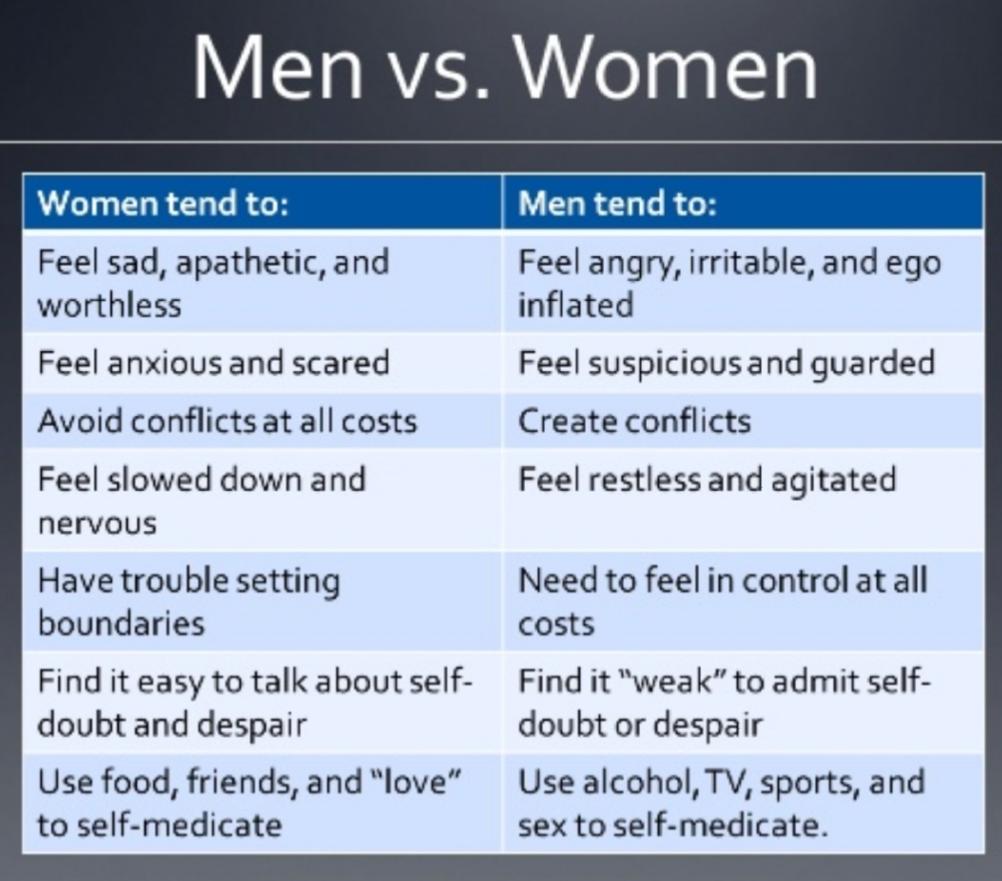
While men and women both experience depression, their symptoms may seem different. Men may display more anger or aggressive behavior, expressing their depression outward. Family, friends, and even medical professionals may not see these symptoms as depressive symptoms; and let’s be honest, even if they did and told the man so, most likely he would deny it and not seek treatment for it. Men may attribute it to some external factor like problems at work or financial stress, therefore they won’t readily accept they need to talk with someone about depression.
What is depression?
Depression is a common but serious mood disorder that affects the ability to feel, think, and handle daily activities. Clinical or Major Depressive Disorder must have symptoms present for 2 weeks to confirm the diagnosis.
(Click the link below for more information about depression)
As I mentioned earlier, men experience depression differently than women. The following are some examples of signs or symptoms for men to consider:
Escapist behavior, such as spending a lot of time at work or on sports
Irritability or inappropriate anger
Controlling or violent or abusive behavior
Risky or reckless behavior like excessive speeding or disobeying traffic laws, road rage, etc.
Alcohol and/or drug abuse
Common depressive symptoms: feeling sad, hopeless, empty, feeling extremely tired, difficulty sleeping, little to no pleasure in activities
Focusing on more physiological symptoms like headaches, digestive problems, tiredness, long-term pain issues, etc.
Downplaying these signs and symptoms, making some other excuses as reasons for the way they feel, externalizing emotional pain
Reluctance to discussing depressive symptoms (difficulty trusting to open up)
Resistance to mental health treatment (stigma-men don’t ask for help)
Whether you seek treatment or not, men should be honest with themselves about how they are feeling or what they are thinking. Sometimes it is difficult to accept that you are not feeling as well as you would like, and may even be embarrassed to say something to someone. The following are some coping skills to consider while you are sorting out these thoughts and feelings:
Set realistic goals and prioritize. Know your limits and do not go past them. When you are feeling overwhelmed, usually it is because you have taken on more than you can handle. It’s not macho to pile everything on and take care of things yourself–it’s foolish! Identify the top 3 things that need to be addressed and ONLY focus on those three things. Once you have a better handle on them, you can address other issues on your list.
Seek out emotional support. You would be surprised who your support network is; all you have to do is ask. Reach out to someone you trust and mention to them that you are having a difficult time, and ask if they would mind if you vented to them. Who knows, it may really help, and next time you will be the one they come to!! More people relate to what you are going through then not, so reach out to someone.
Learn ways to alleviate stress. This is extremely important, often times the depressive symptoms you are experiencing are the result of significant unaddressed stress. Massage, meditation, yoga, physical activity like sports or weight lifting, progressive relaxation exercises, etc. are some stress relieving activities to consider.
Live healthy lifestyle. This encompasses many different areas like proper diet and nutrition, regular exercise, adequate sleep, socialization with people who are positive influences (and not those who are steeped in negativity), etc.
Men have been sex-role-stereotyped to be the “strong silent type”: don’t express feelings, tough it out, be self-confident and aggressive, “fix things”, physically imposing, sexually experienced, driven. These societal and cultural norms create rigid beliefs about masculinity that are misguided and maladaptive to modern-day living. This creates undue pressure not only for the men but for the women who have to deal with them!! If more men would be honest and open about their feelings (and be willing to address them), there would be significantly less conflict and significantly more understanding.
I have worked with a number of men in my practice, as well as known some personally, who have (or should have been) diagnosed with depression. I too have experienced depression and probably have been Dysthymic for years.
Dysthymia: a mild but long-term form of depression. I describe it, non-clinically, as chronic “low-grade dumpiness”. I told you it wasn’t clinical! It’s not Eeyore from Winnie the Pooh level, but it could go there. What is most noticeable is irritability, low frustration tolerance, and physical tension from the shoulders to the head.
I notice the more irritable (or depressed) men are the more judgemental they are, and the more absolute their thinking is (black or white, right or wrong). “Only the Sith deal in absolutes”…sorry Star Wars reference there. But this absolute thinking could lead someone down a dark path, maybe not Darth Vader territory. There is an increased level of inflexibility, and/or an inability to consider alternate viewpoints and ideas. It is difficult for people to communicate with them because they do not want to be vulnerable, or exposed as “less than a man”. They may appear unreasonable, but in reality they are trying to keep the attention away from what is really going on…their depression.
Men will focus more on external issues that may not actually affect them personally or express negative thoughts that serve no other purpose but to accentuate the irritability (or depression) they are feeling. Sometimes it may come off as humor or sarcasm, but there is truth and anger mixed in. How can you tell if it is just joking behavior versus passive-aggressive sarcastic behavior? You can tell by who or what the humor is directed at. When it is directed at a “them”, to me it is an attempt to joke at someone or something else’s expense. I don’t find that funny, I see that as someone’s way of “lightly” expressing their dissatisfaction or displeasure with that person or thing. (Now, I am not referring to stand-up comedians or satire, although they could take things too far as well)
When I see people using self-deprecating humor, laughing at themselves, or including themselves in the joke, I find that to be more relatable humor. (Now of course, when I see people constantly putting themselves down “humorously”, that to me is not funny either). I believe we have to use humor to get through the rigors of our lives, it is essential, but how one uses it is significant. People who use humor or sarcasm to express themselves, especially about other people, are very likely masking some internal struggle they have not or are not willing to address.
When men understand what is going on with themselves internally, they feel the weight of the world being lifted, they feel more understood, and are less likely to be irritable and angry…and less depressed. It is not a sign of weakness for men to talk with someone about their mental health. In fact, it is the complete opposite; it is a sign of internal strength to admit one cannot manage the stressors of their world by themselves. About 2/3 of my clientele are male, and almost every one of them had a different view of therapy leaving than they did when they first came in (mostly positive!).

 S.Pace's PsychoHealth Blog